Beyond IPM 
The negative impact pesticide use has on wildlife and the environment in general is well documented and the need to challenge Integrated Pest Management (IPM) as supposedly being the best practice approach for the use of pesticides is a much wider issue that should be explored.
Beyond IPM is an integral part of Sustainable Turf Management and would now be considered a more appropriate best practice approach.
Looking beyond short-term benefits and limitations of IPM by more actively engaging with a systematic and holistic approach which delivers a sustainable outcome to turf surface management is the natural step on from IPM. With adequate controls, the direct risk to human health from pesticide use is typically very low, however, the indirect risk may be higher, whilst the risk to wildlife is relatively high.
The elimination of pesticides, in practice, might be an unachievable goal if current expectations are not challenged, although a focus on planned and documented maximum minimisation should at least be an active initial goal.
Setting the surface aim
First up we might consider what we want to achieve from the provision of a particular turfgrass surface. For example, is it for:
• providing protective cover for wildlife?
• providing food for insects?
• providing an attractive backdrop to floral displays?
• providing an area for local community use?
• preventing soil erosion?
• the playing of a sport, and to what level of quality?
The concept of sustainability includes the involvement of stakeholders, so these should be identified and then consulted in all management plans, including the use or otherwise of pesticides. Once stakeholders have been consulted and the aim of surface agreed, then an appropriate sustainable turf management plan can start to be devised.
Sports surface
If an existing turfgrass surface is primarily for the playing of sport then one of the system components that needs to be embedded into the sustainability thinking is that which a manager has direct control – this is the management plan, and IPM should currently be an integral part of the overall plan.
An early stage of IPM is to identify unhealthy plant situations. A suitable survey and analysis of a surface (including the rootzone and subsoil) can identify such situations and can provide the base data on which to devise a suitable maintenance programme.
Examples might include:
• exposed areas.
• maintenance activities under incorrect soil conditions.
• plant stress caused by overuse.
• poor maintenance work that increases plant stress.
• shaded areas.
• sheltered areas that eliminate or minimise airflow.
• soil compaction.
• soil nutrient status and chemical composition.
• soil pH levels.
• use of a surface under the wrong conditions.
• wet soils.
Unhealthy growing and development conditions contribute to the increased likelihood of weed, pest and disease problems. Identifying and then addressing underlying conditions is the way forward in creating a healthier and less stressed turf surface.
Applying ‘preventative’ pesticides (especially for diseases and some pests) is an all too persuasive argument by suppliers to time or resource challenged ground staff, however, this does fit well with the current practice of IPM, where pesticide use should, in theory, only be used where all other options have been exhausted.
Pesticide overuse, or pesticide first, will only perpetuate unhealthy conditions – this is not a sustainable situation. Developing a vision and conviction to go beyond current IPM practices is needed to ensure a more sustainable approach.
Too often we here why you cannot manage sports turf surfaces without pesticides, however, numerous individuals and clubs are showing that a non-pesticide approach to turf management can be achieved, especially through a better understanding and insight of the relationship between the turf and soil environment.
The football pitch at Forest Green Rovers was the first organically maintained football pitch in the world and the groundsman "produced an excellent surface for FGR’s promotion winning campaign without the use of pesticides or chemicals used by many groundsmen in the UK.”
(Gazette, 2nd July 2017, ‘FOOTBALL: Forest Green groundsman Witchell nominated for top award’).
With the range of equipment and materials available to grounds staff to support cultural and physical maintenance practices, this should not be as challenging an issue as often perceived.
A. Disease management
The implementation of an integrated disease management strategy that emphasises the importance of having a good understanding of disease ecology along with correct cultural and physical practices, which are based on sound agronomic principles, can provide a solid foundation in controlling diseases, as well as reducing the severity of any actual damage caused.
However, the need to have plant protection products as a backup on which to call where severe disease problems arise is considered an important part of the current IPM regime, and we can’t pretend otherwise. [1] [2]
Having an appropriate and acceptable threshold below which no fungicides are applied is a key area that stakeholders should be more actively engaged with. Objective cost and surface quality implications for different levels of threshold can be clearly explained; something which is rarely undertaken at the moment.
What is needed is to push the boundaries of effective cultural and physical maintenance practices to reduce the need for any form of fungicidal control. In practice this will be challenging but having this as the focus of ‘Beyond IPM’ can help to reduce the reliance currently given to synthetic fungicides.
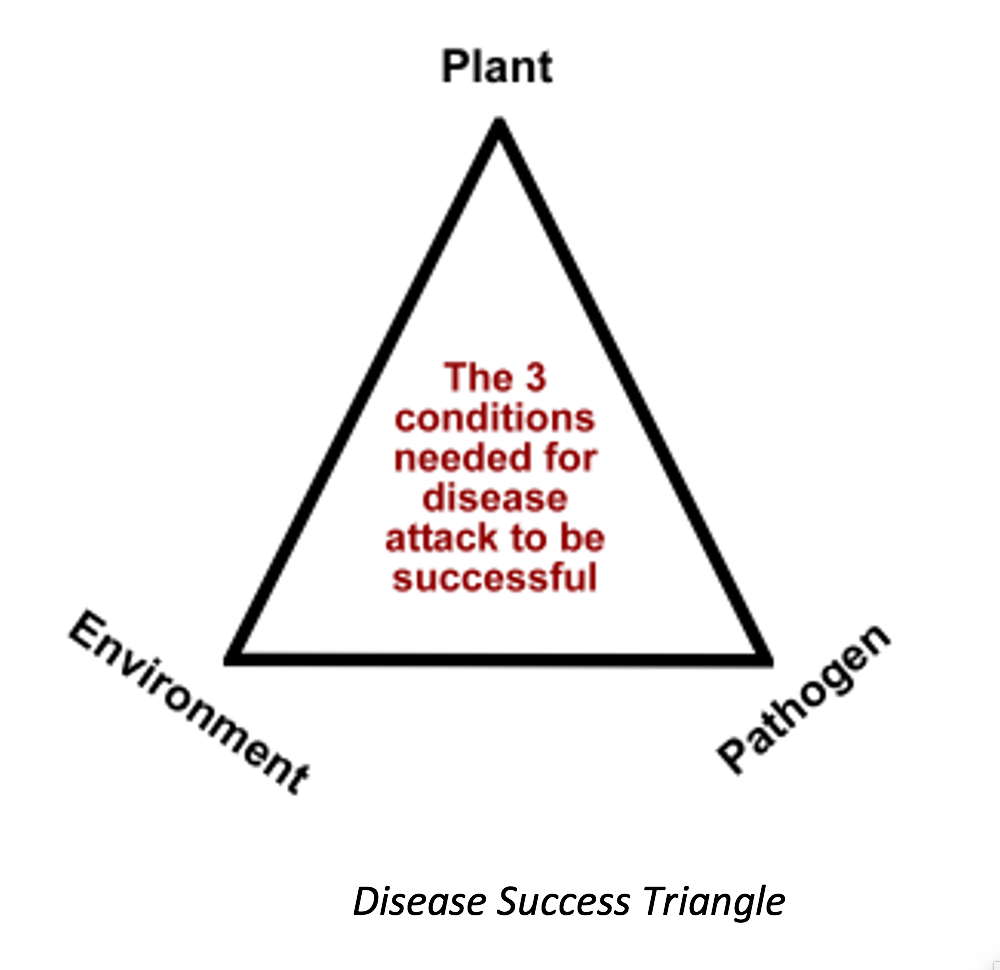
1. a susceptible grass, or plant.
2. an active pathogen.
3. a favourable environment (in particular conditions such as a stressed and shortly mown grass plant, water availability, relative humidity, temperature, soil texture, soil pH, soil organic matter and nutrient availability). [4]
Cultural practices can be implemented to assist in alleviating the conditions for a successful disease attack. [5]
Particular activities can include:
(a) Improved grass and seed use:
Select grass species and cultivars that are more resistant to diseases and have this as a higher priority than some other criteria, such as seed cost or fineness of leaf.
Consider whether the blend of cultivars and mixture of species is better for an enduring surface rather than seeds and grasses that produce an excellent surface for a limited period of the year.
(b) Fertiliser applications:
Select fertilisers that complement the growth and development of the grass species being encouraged. Apply fertiliser at the correct time of year and in sympathy with the prevailing conditions; do not apply a fertiliser on a date that just happens to be the same as the year before.
Do not apply fertiliser at a rate that forces excessive growth otherwise the grass sward will be more prone to disease and less resistant to wear and tear.
Do not apply unnecessary amounts of nutrient, or nutrients that are not actually required. Carry out a soil test to at least provide the initial base information on which to build up your fertiliser programme: Don’t just rely on that but also the actual physical condition of the sward.
Consider whether the solution to one problem may contribute to the development of another problem. A good example is that of applying a relatively high content nitrogen fertiliser to a grass sward during early August to solve the problem of Red Thread. This may, however, then encourage the development of Microdochium (Fusarium) Patch disease which is a much more severe and damaging disease of turfgrasses.
Consider the effect the fertiliser can have on the soil pH; will it produce an acidic reaction, or will it raise the pH to a more alkaline condition. Be careful if it raises the soil pH as this can then encourage Take-All Patch disease. Have you been applying a controlled release fertiliser for a period of time an does this have a relatively neutral soil reaction? If so, then this will most likely be encouraging annual meadow grass, which as we know is highly susceptible to a range of turfgrass diseases.
Besides the obvious aim of wanting to encourage a strong, healthy and durable turf, the application of fertiliser can have a significant influence on the conditions that encourages disease activity.
(c) Moisture:
Turfgrass diseases have a particular need for soil moisture to enable them to develop. Surface moisture, especially in the form of dew, provides an ideal environment in which a disease can rapidly colonise a turfgrass sward in a short period of time. The application of a contact fungicide is often the first action taken to halt the spread of the disease when optimum conditions arise. The ideal action, however, would have been to implement improved cultural and physical practices that reduce the establishment of these optimum moist conditions in the first place.
Reducing dew is a key, but simple, practice that should be carried out as early as possible in the morning to remove this problem situation from being utilised effectively by fungal diseases.
Depending upon the species present the incidence of dew will be more significant for some species than others, so emphasising desirable species within a sward is essential.
Irrigation management can also play a major part in managing the risk of disease attack. In particular the quantity and timing of applications need to be effective and consistent in producing a microenvironment in the turf surface and rootzone that reduces the potential for disease development.
Do not over apply water, but also do not apply it on a little and often basis as this will encourage a moist surface layer, shallow rooting and weaker turf: all of which will make ideal conditions for a disease strike. If weather conditions are extremely hot and dry, especially during drought conditions, then the act of syringing a surface to keep it cool is not particularly going to increase the incidence of disease if carried out correctly.
(d) Aeration:
A well-aerated healthy rootzone encourages a turfgrass environment that is more resilient to disease attack and less liable to plant stress.
Thatch (especially spongy thatch, rather than fibrous thatch) is a common problem in turfgrass environments and can contribute to moisture retention, reduced root growth to depth and reduced air exchange within the soil profile.
Keeping the surface aerated, scarified, verticut and groomed will encourage easier airflow between grass blades, consequently reducing the potential for disease attack. [6] [7]
(e) Mowing:
Defoliation and a reducing height of cut, as well as increasing mowing frequency, have been shown to have a significant effect on root growth, in particular root biomass and thickness of roots. The lower the height of cut the shallower the root growth, the less root biomass is present, and the roots are thinner. In addition, close cutting of a sward will typically produce a denser surface, which is ideal for sports such as golf and bowls, however, this does result in an increased relative humidity between the grass blades. All of these conditions increase the susceptibility of the grass to disease because you are stressing the grass plant, and often unnecessarily. [8] [9] [10]
B. Pest management
For convenience, pests can be sub-divided according to their size: smaller soil dwelling insects and creatures, or larger mammals and birds. The type of control methods can vary considerably depending upon the category of pest being managed.
The main smaller turfgrass pests are leatherjackets, chafer grubs and earthworms. [11]
Ants and nematodes are a lesser problem but can be locally significant. An understanding of the lifecycle of these smaller pests is essential if effective control is to be undertaken.
The aim would be to (a) reduce the ground and environmental conditions which favour a pest and (b) control the pests when they are at their most vulnerable in their growth and development stage.
The main larger turfgrass pests are moles and rabbits, although foxes, birds and deer can be locally significant. Getting to know the habitats and habits of these animals can help in devising control methods that range from discouraging them, to humanely (although this might be considered an oxymoron) killing them.
Using maintenance activities to control pests: Earthworms
The conditions that are favourable to earthworm surface activity can be identified and then addressed to make them less favourable. [12] [13]
Several maintenance activities can be used to influence the production of an environment that is less attractive to earthworm activity, including:
• Consider reducing the use of organic fertilisers (although this may be a conflict with the aims of a sustainable turfgrass surface); A more appropriate approach may be to ensure organic fertilisers are not applied either too early or too late in the growing season, as this is when earthworm surface activity can be high.
• Apply acidic top-dressings and fertilisers; being careful not to over acidify the soil surface to the detriment of the grass sward.
• Remove thatch accumulation by hollow-tining (if a severe thatch build-up is present) and other aeration methods.
• Do not apply lime unless essential.
• Reduce reliance on fertilisers which produce a weak acidic to alkaline soil reaction.
• Test the pH of irrigation water; counter measures will need to be taken if it is alkaline.
• Regular drag brushing and switching to disperse earthworm casts to maintain playability.
The maintenance activities of aeration and thatch reduction will also reduce the level of protection offered to grubs during the winter months by increasing their exposure to cold weather.
Leatherjacket and Chafer grub control
Develop a sward with a deep and substantial root system as this can act as an insurance policy against a low to mild attack of grubs, without the need for any chemical control, although the problem of bird damage in search of grubs can be a major issue.
To manage this situation and to reduce the attractiveness of a surface to grubs, significant aims will be to keep thatch levels down, reduce moisture content of the soil profile during the late summer to ideally desiccate any eggs laid, and to keep the surface open with aeration over the autumn to early winter (if ground conditions permit) to aid cold weather penetration into the soil profile to stress the young grubs.
C. Weed management
Weeds that are present in a sports turf or fine ornamental lawn will generally only provide a very low health and safety risk due to reduced turf strength, potentially producing either a slippery surface or one which provides less traction (or grip) for a player. This could increase the potential for minor injuries from twists and falls, but the likelihood of injury would be very small. Moss and algae can pose a higher risk in some areas, especially some golf course sloping turf surfaces, due to the significantly slippery surface they can create under moist or wet conditions. [14]
The main issues to do with weed management are that of:
• the competition effect weeds can have with desirable grass species.
• the effect weeds might have on the playing performance of a turfgrass surface.
• a reduced carrying capacity of a turf surface where a high quantity of weeds is present.
The negative effect weeds can have on playing performance is probably the main practical reason why selective herbicides may need to be applied to a turfgrass surface.
Weeds create an environment in which ball reaction is not consistent, whilst some species also die back during the winter creating a thinner sward. [15] This can reduce the carrying capacity of a pitch and the quality of play due to a thinner more open sward and is a significant reason why weed management is important in turf surface management.
Correct turf management practices which reduce the potential for weed colonisation and spread are essential if selective herbicide use is to be minimised or even eliminated.
Examples of good practices include:
• applying fertilisers which create a mildly acidic soil reaction, making surface conditions which are less desirable for many weeds.
• apply optimum quantities of appropriate nutrients, and certainly not excessive amounts and also not including nutrients just because ‘it sounds good to have a range of nutrients available’; the aim being from turf nutrition is to maintain a relatively hard wearing and dense sward.
• undertake correct mowing practices – not too long / too short; correct frequency; well set machines; boxing off / letting clippings fly as appropriate; so as not to overly stress the grass plant.
• irrigate to create a deep-rooted sward and not a shallow rooted one which will be less competitive to weed invasion.
• aerate under correct soil moisture conditions to encourage a deep-rooted sward which will be better placed to withstand any potential weed invasion.
• maintain a dense sward and repair areas wherever possible to reduce exposed areas which would otherwise be an invitation for weeds to colonise.
• overseed, using appropriate grass species, and at times when quick germination and rapid development is anticipated, so as to maintain a dense sward.
• regular scarification and verticutting to stress or control trailing weeds such as clovers.
• and don’t forget hand weeding, even on a large surface such as a football pitch, a little and often on a planned regular basis will soon keep weeds down – clearly this is going to be difficult or not possible where tight financial constraints are in place, but even a small effort can help.
A key factor that must therefore be considered is the active management of the carrying capacity of the grass surface to ensure that the ecological capacity of the surface is not exceeded as this will reduce healthy growing conditions, increasing the likelihood that pesticides may be needed.
Carrying capacity can, however, have three different meanings;
1. Physical carrying capacity,
2. Perceptual carrying capacity,
3. Ecological carrying capacity,
and each of these should be considered when taking a systems approach to managing the wide range of turf surfaces: [16]
If pesticides are used, the first question should be ‘Why has the need arisen for their use?’
Other questions would include:
• Will they improve the possibility of optimal carrying capacity being achieved?
• Will the main positive impact be from an improvement in playing quality and/or visual appearance?
• Are the thresholds which have been set for the use of a selective herbicide appropriate? The acceptable number of weeds may be lower than actually needed: is there really that much practical difference between a 5% content and a 3% one? Or a 14% one and a 20% one? Weed content will also increase and decrease depending upon the time of year and period of growth for the weed.
Have stakeholders been identified and consulted? How are they to be engaged with and what influence can they have on the decision-making process that relates to the management of the turfgrass surface?
What are the local issues that have to be taken into consideration before the use of pesticides can take place?
What impact might the use of pesticides have on resident and transient wildlife within the site boundary? Recording and monitoring wildlife and their activity levels within the site boundary is one part of IPM, but it plays a more prominent role in a systems approach to managing land areas. Should not the thinking be wider than just the confines of the immediate turfgrass surface?
Weeds may support a diversity of invertebrates and this may be an area that has not been explored fully before considering pesticide use. For example, Stinging nettle (Urtica dioica) might be considered a weed of some peripheral areas of general amenity surfaces. However, this might be a position that is revised in many situations due to the abundance of invertebrates that feed on the plant. One detailed study found that 27 insect species relied on this plant as, more or less, their sole source of food, whilst 17 also used it as a food source along with other plant species. Could peripheral predators aid in reducing undesirable pests of turfgrass surfaces? [17]
What the is the wider impact that might arise from the use of pesticides on the environment which is beyond the local area that surrounds the managed site?
IPM will consider the specific crop within a site, but not the wider implications. Are there any regional, national, international or global concerns that you may be able to assist or mitigate against by implementing a ‘Beyond IPM’ approach?
Conclusion
The focus should always be on the minimal to zero use of pesticides to go ‘Beyond IPM’. A sustainable approach to managing turfgrass surfaces will need to consider how ‘Beyond IPM’ can be integrated into applied management activities.
Integrated Pest Management has been a focus on addressing site specific situations, but for the present and future the focus should be on looking at a sustainable ‘Beyond IPM’ approach which requires a more insightful consideration for the longer-term impact of actions on the local ecosystem (plants and wildlife), as well as the environment which sits outside of the site boundary.
Users of pesticides should develop management plans which are applied in practice and that have already considered how unhealthy plant situations can be alleviated by cultural and physical means before resorting to chemical applications.
The impacts and consequences of pesticide use, not just within the site boundary but in the wider environmental context, need to be reflected on and evaluated prior to including, or excluding, pesticides as part of a responsible and sustainable management plan.
[2] Mann, R.L. (2004) ‘A review of the main turfgrass diseases in Europe and their best management practices at present’, Journal of Turfgrass and Sports Surface Science, Vol. 80 2004, pp19-31
[3] Beard, J.B. (1973) ‘Turfgrass: Science and Culture’, Prentice-Hall, p576
[4] Smith, J.D., Jackson, N. & Woolhouse, A.R. (1989) ‘Fungal Diseases of Amenity Turf Grasses’ (Third Edition) E&F.N. Spon Ltd, pp3-6
[5] Smith, J.D., Jackson, N. & Woolhouse, A.R. (1989) ‘Fungal Diseases of Amenity Turf Grasses’ (Third Edition) E&F.N. Spon Ltd, pp7-13
[6] Juska, F.V., Cornman, J.F. & Hovin, A.W. ‘Turfgrasses Under Cool, Humid Conditions’, in Hanson, A.A. & Juska, F.V. (Eds) (1969) ‘Turfgrass Science’ p501
[7] Shildrick, J.P. (1985) ‘Thatch: A review with special reference to UK golf courses’, The Journal of the Sports Turf Research Institute Vol.61 1985, pp8-25
[8] Troughton, A. (1957) ‘The Underground Organs of Herbage Grasses’, University College of Wales, Commonwealth Agricultural Bureaux, pp94-102
[9] Beard, J.B. (1973) ‘Turfgrass: Science and Culture’, Prentice-Hall, pp384-390; 580-581
[10] Parr, T.W., Cox. R. & Plant, R.A. (1984) ‘The effects of cutting height on root distribution and water use of ryegrass (Lolium perenne L. S23) turf’, The Journal of the Sports Turf Research Institute Vol.60 1984, pp45-53
[11] Mann, R.L. (2004) ‘A review of the main turfgrass pests in Europe and their best management practices at present’, Journal of Turfgrass and Sports Surface Science, Vol. 80 2004, pp2-18
[12] Kirby, E.C. & Baker, S.W. (1995) ‘Earthworm populations, casting and control in sports turf areas: A review’, Journal of the Sports Turf Research Institute, Vol.71, pp84-98
[13] Mann, R.L. (2004) ‘A review of the main turfgrass pests in Europe and their best management practices at present’, Journal of Turfgrass and Sports Surface Science, Vol.80, pp2-7
[14] Baldwin, N.A. (1988) ‘Technical Note. Identification and control of algal slime on turf’, Journal of the Sports Turf Research Institute, Vol.64, pp177-180
[15] Adams, W.A. & Gibbs, R.J. (1994) ‘Natural Turf for Sport and Amenity: Science and Practice’, CAB International, p165
[16] Green, B. (1981) ‘Countryside Conservation. The protection and management of amenity ecosystems’ (2nd Edition), Unwin Hyman, p186
[17] Pollard, E., Hooper, M.D. & Moore, N.W. (1974) ‘Hedges’, The New Naturalist, Collins, pp109-110