Bowling Green Maintenance: 01. Introduction 
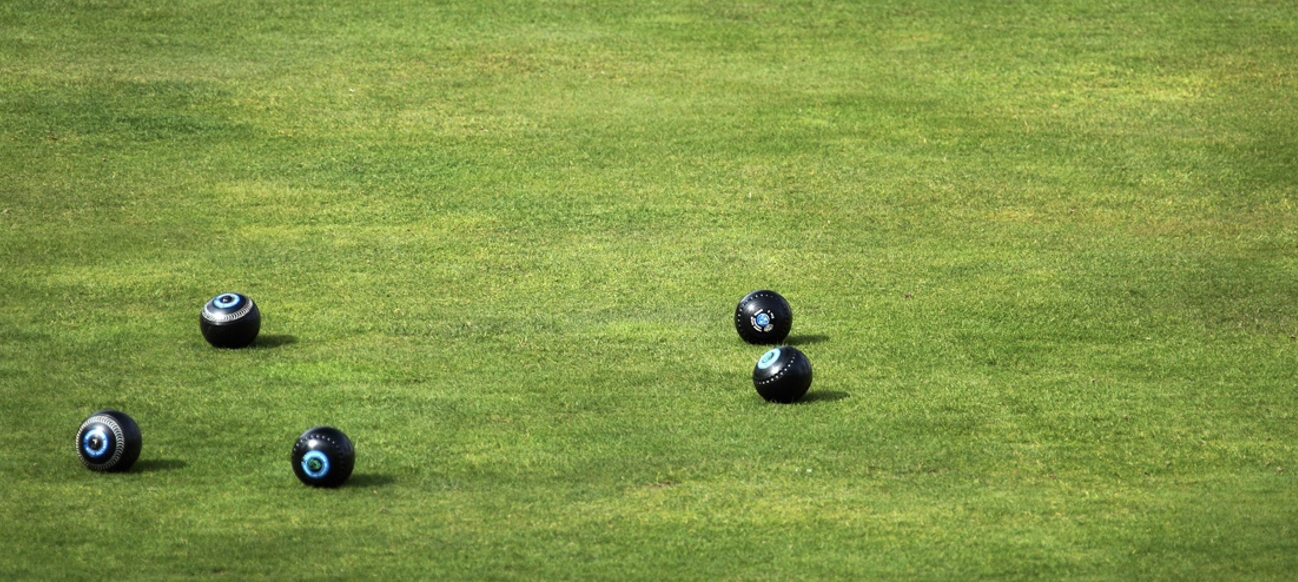
This could be either flat bowls or crown green bowls, but the focus here is on flat green bowls.
The aim is to provide a surface which is flat and even throughout, firm, and relatively free of fine-leaved weeds and free of broad-leaved weeds.
The playing speed should be suitable to meet the needs of its users, with a medium speed probably being the most desirable, therefore allowing for the potential to increase to a fast green or decrease slightly to a medium-slow green. Having this flexibility can help to balance needs of the bowlers with that of the turf surface.
The bowling season typically runs from May to September, although some clubs will start a little earlier in April and others will finish towards the beginning of October.
2. Construction.
3. Playing Surface.
4. Performance Standards.
5. Performance Standards Data.
6. Usage Management.
7. Green Speed.
8. Usage Management.
9. Ditch and Surrounds.
10. Grass Species.
11. Mowing.
12. Grooming.
13. Scarification & Verticutting.
14. Brushing & Switching.
15. Aeration.
16. Decompaction.
17. Fertiliser Application.
18. Biostimulants.
19. Top-dressing.
20. Irrigation.
21. Wetting Agents.
22. Rolling.
23. Use of Pesticides.
24. Controls v Expectations.
25. Weeds.
26. Pests.
27. Diseases.
28. Annual Material Requirements.
29. Annual Staffing Requirements.
30. Quarterly Plans.
31. Spring plan.
32. Summer plan
33. Autumn plan.
34. Winter plan.
35. Annual Plan Summary.
36. Total Input Hours per Month.
37. Total Input Hours per Activity.
38. Minimal Resources and Low Club Membership.